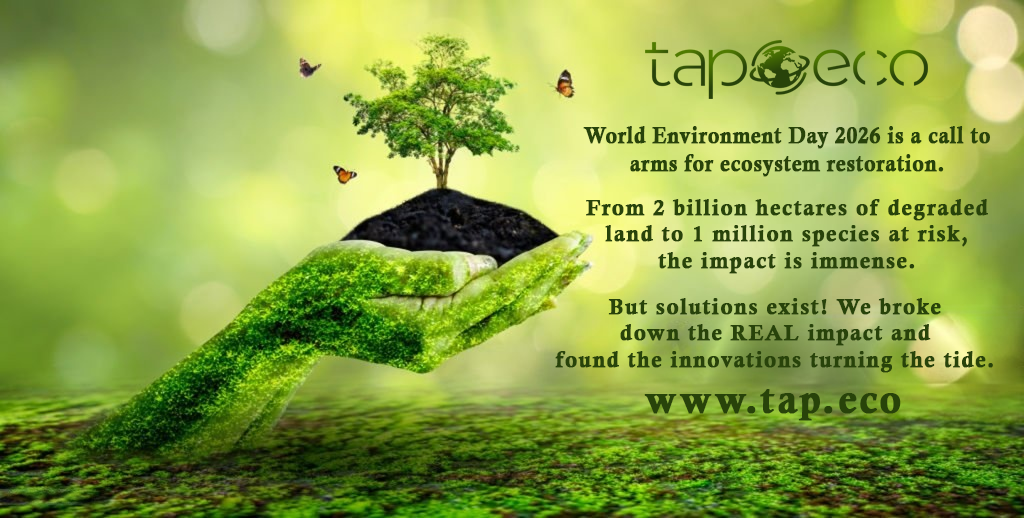
World Environment Day 2026: The Urgent Call for Ecosystem Restoration
Jun 05, 2026
This deep dive explores the crucial difference between traditional reforestation and the holistic approach of rewilding, revealing why ecological restoration must go beyond simple tree planting to address biodiversity loss and climate resilience effectively.
In our urgent global effort to combat climate change and biodiversity loss, planting trees has emerged as a popular and seemingly straightforward solution. Initiatives worldwide commit to planting billions of trees, driven by the noble intention to sequester carbon and restore deforested lands. While tree planting is a vital tool, a growing body of scientific evidence suggests that merely increasing tree cover, especially through monoculture plantations, falls short of addressing the complex ecological crises we face. The true path to environmental resilience lies in a more nuanced approach: rewilding. This paradigm shift focuses not just on trees, but on restoring entire ecosystems, allowing natural processes to take the lead, and fostering the biodiversity essential for a healthy, functioning planet.
The Problem by the Numbers:
To understand why 'just planting trees' isn't enough, we must differentiate between conventional reforestation and the comprehensive strategy of rewilding. Reforestation, at its most basic, involves planting trees in areas where forests have been removed. Often, this means planting fast-growing, single-species saplings across vast tracts of land. The primary goal is usually carbon sequestration or commercial timber production. While this can provide some immediate benefits, it frequently overlooks the intricate web of life that defines a true forest ecosystem.
A natural forest is far more than just a collection of trees. It's a dynamic, interconnected community involving a vast array of flora, fauna, fungi, and microbes. Healthy soil, rich in organic matter and fungal networks, plays a critical role in water retention, nutrient cycling, and long-term carbon storage. The presence of diverse plant species supports a broad range of insects, birds, and mammals, creating complex food webs and ecological services like pollination and pest control. Monoculture plantations, by contrast, lack this complexity. They often deplete soil nutrients, offer limited habitat for native wildlife, and are highly susceptible to widespread disease or pest outbreaks because of their genetic uniformity. They are, in essence, green deserts – visually appealing but ecologically impoverished.
Rewilding, on the other hand, is a conservation approach that focuses on restoring natural processes and, where appropriate, reintroducing keystone species to an ecosystem. The philosophy is to step back and allow nature to take the lead, rather than dictating every aspect of restoration. This often means creating large, protected areas where natural disturbances like grazing, flooding, or even limited fires can occur, shaping the landscape and fostering diversity. For example, the reintroduction of wolves to Yellowstone National Park triggered a trophic cascade, leading to healthier riparian zones as elk grazing patterns shifted, ultimately benefiting beaver populations and entire river ecosystems. This demonstrates how a single keystone species can initiate a profound ecological recovery across an entire landscape.
Rewilding champions the return of self-regulating ecosystems, which are inherently more resilient to climate change and environmental pressures. It recognizes that carbon sequestration is maximized not just by trees, but by healthy soils, diverse plant life, and thriving animal populations that contribute to nutrient cycling and seed dispersal. It's about restoring the entire 'operating system' of nature, not just one component.
“We can't just plant trees and walk away. A true forest is a complex tapestry of life, and rewilding aims to restore that intricate pattern, allowing nature to heal itself.”
The solution to our ecological crisis lies in embracing holistic ecological restoration, where rewilding principles are integrated with thoughtful human intervention. This means moving beyond simple tree planting targets to focus on biodiversity metrics, ecosystem health indicators, and the return of natural processes.
Innovative rewilding projects worldwide are demonstrating incredible success. The Knepp Estate in the UK, once an intensively farmed agricultural land, has been transformed into a thriving wildland simply by removing fences and reintroducing grazing animals like longhorn cattle, deer, and pigs. These 'ecosystem engineers' mimic the roles of extinct megafauna, creating a mosaic of habitats that has led to a dramatic surge in biodiversity, including rare species like nightingales and purple emperor butterflies. Similar efforts are underway across Europe through initiatives like Rewilding Europe, which aims to create large, wild areas where wildlife can roam freely and natural processes can flourish, benefiting both nature and local communities through ecotourism and sustainable livelihoods.
Beyond these large-scale projects, the principles of rewilding can be applied at smaller scales through practices like 'assisted natural regeneration' (ANR), where human intervention is minimal, focusing on removing barriers to natural regrowth such as invasive species or grazing pressure. This approach is often more cost-effective and creates more biodiverse, resilient ecosystems than intensive planting projects. Furthermore, a focus on native species in any planting initiative is crucial, ensuring that the trees planted are appropriate for the local ecosystem and can support local wildlife.
Policies are also shifting. Governments and conservation organizations are increasingly recognizing the need for integrated land management strategies that prioritize ecological connectivity, climate resilience, and ecosystem services. Investing in research on trophic cascades, soil ecology, and the role of diverse ecosystems in carbon sequestration is vital. Ultimately, repairing our planet demands a shift in mindset: from managing nature as a resource to stewarding it as a complex, self-organizing system capable of incredible healing if given the space and opportunity.
Don't just read. Contribute. Your daily choices and civic engagement can profoundly impact the success of rewilding and holistic ecological restoration.