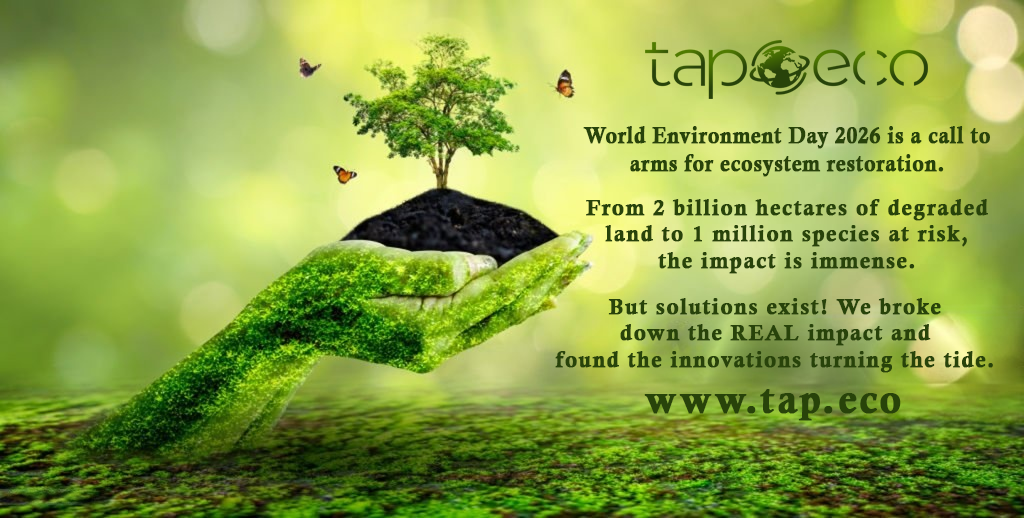
World Environment Day 2026: The Urgent Call for Ecosystem Restoration
Jun 05, 2026
This deep dive exposes the staggering environmental and social impact of fast fashion's textile waste, from overflowing landfills to devastating effects in global south communities, and highlights innovative solutions paving the way for a circular textile economy.
Fast fashion has woven itself into the fabric of modern life, offering an endless parade of trendy, affordable garments that satisfy our desire for novelty. But beneath the glittering surface of runway-inspired styles and irresistible price tags lies a darker reality: a mountain of textile waste growing at an alarming rate. Our insatiable appetite for new clothes has created a global crisis, pushing natural resources to their limits and inundating landfills worldwide. The journey of these discarded garments often ends far from their point of purchase, frequently impacting communities least equipped to handle the deluge. Understanding where our old clothes truly go is the first critical step toward unraveling this complex environmental and social challenge.
The Problem by the Numbers:
The fast fashion model is built on speed, volume, and low costs. Designers churn out dozens of collections a year, responding to fleeting trends, pushing consumers to constantly refresh their wardrobes. The allure is undeniable: stylish clothes, often for less than the price of a takeout meal. But this affordability comes at a steep price for the planet and, increasingly, for people in the Global South.
When we clear out our closets, many of us dutifully bag up our old clothes for donation. The perception is often that these items will find a new home locally or be given to those in need. While a small percentage does get resold in charity shops, the sheer volume of donations far outstrips local demand. This surplus, often containing low-quality fast fashion garments that quickly fall apart, is then bundled and exported, primarily to countries in Africa, Asia, and Latin America, creating a massive global secondhand clothing market.
A prime example of this phenomenon is Ghana's Kantamanto market in Accra, one of the largest secondhand clothing markets in the world. Every week, approximately 15 million used garments arrive in Kantamanto from Western countries. These bales of 'Obroni Wawu' – meaning 'dead white man's clothes' in Twi – are bought by local vendors hoping to find treasures among the trash. However, the quality has deteriorated significantly due to the prevalence of fast fashion. An estimated 40% of these imported clothes are immediately unusable, deemed 'waste-at-arrival' because they are torn, stained, or simply unwearable. This translates to 6 million garments entering Ghana's waste stream every single week from Kantamanto alone.
The environmental consequences in these receiving countries are catastrophic. Landfills, already struggling to manage domestic waste, become choked with textile mountains. Without proper waste management infrastructure, much of this clothing is openly burned, releasing toxic fumes and greenhouse gases into the atmosphere, or it ends up in rivers and oceans, contributing to plastic pollution. The synthetic fabrics prevalent in fast fashion, like polyester and nylon, can take hundreds of years to decompose, fragmenting into microplastics that contaminate water sources, marine life, and even the air we breathe. The economic impact is equally devastating; the influx of cheap, imported clothing stifles the growth of local textile industries, creating a dependency that is difficult to break.
“The global secondhand clothing trade, once a lifeline for communities, has become a conduit for waste, transforming vibrant markets into landfills and deepening the environmental crisis in the Global South.”
Compounding the issue is the complexity of textile composition. Modern garments are often made from blends of natural and synthetic fibers (e.g., cotton-polyester). This blending makes traditional recycling processes, which typically require homogenous materials, incredibly challenging and expensive. As a result, very little of the clothing we discard can actually be recycled into new textiles, perpetuating a linear 'take-make-dispose' system that is fundamentally unsustainable.
While the scale of fast fashion waste is daunting, a growing movement of innovators, policymakers, and conscious consumers is pushing for systemic change. The solutions are multifaceted, addressing everything from material science to consumer behavior.
One critical area of innovation is **textile-to-textile recycling**. Traditional mechanical recycling often degrades fiber quality, limiting its use to insulation or cleaning rags. However, new chemical recycling processes are emerging that can dissolve synthetic fibers or separate blends, recovering high-quality raw materials. Companies like Renewcell (Sweden) are transforming worn-out cotton and other cellulosic fibers into new, high-quality textile pulp called Circulose®. Similarly, other startups are developing technologies to depolymerize polyester, allowing it to be spun into new fibers without loss of quality. These advancements are crucial for closing the loop and creating a truly circular textile economy.
Beyond technology, **policy and industry shifts** are vital. Extended Producer Responsibility (EPR) schemes, where brands are held financially and operationally accountable for the entire lifecycle of their products, are gaining traction. Countries like France have implemented EPR for textiles, incentivizing companies to design for durability, repairability, and recyclability. The European Union is also moving towards similar legislation, signaling a global shift towards holding producers accountable.
Furthermore, the rise of **circular economy models** offers promising alternatives. Instead of owning, consumers are increasingly embracing rental, repair, and resale platforms. Companies like Rent the Runway, ThredUp, and Vestiaire Collective are making it easier for garments to have multiple lives, extending their use phase and reducing the need for new production. Brands are also integrating repair services and take-back programs, demonstrating a commitment to product longevity.
Sustainable design principles are also key. This includes designing garments for durability, timelessness, and ease of recycling. Choosing monomaterial fabrics (e.g., 100% cotton, 100% polyester) simplifies recycling processes. Investing in bio-based and regenerative materials, like hemp, organic cotton, and innovative cellulosic fibers, can reduce the environmental footprint from the outset.
Don't just read. Contribute. Your choices have power in reshaping the future of fashion.