GOTS: The Gold Standard in Organic Textiles? A Deep Dive into Certification Truths
Dec 10, 2025
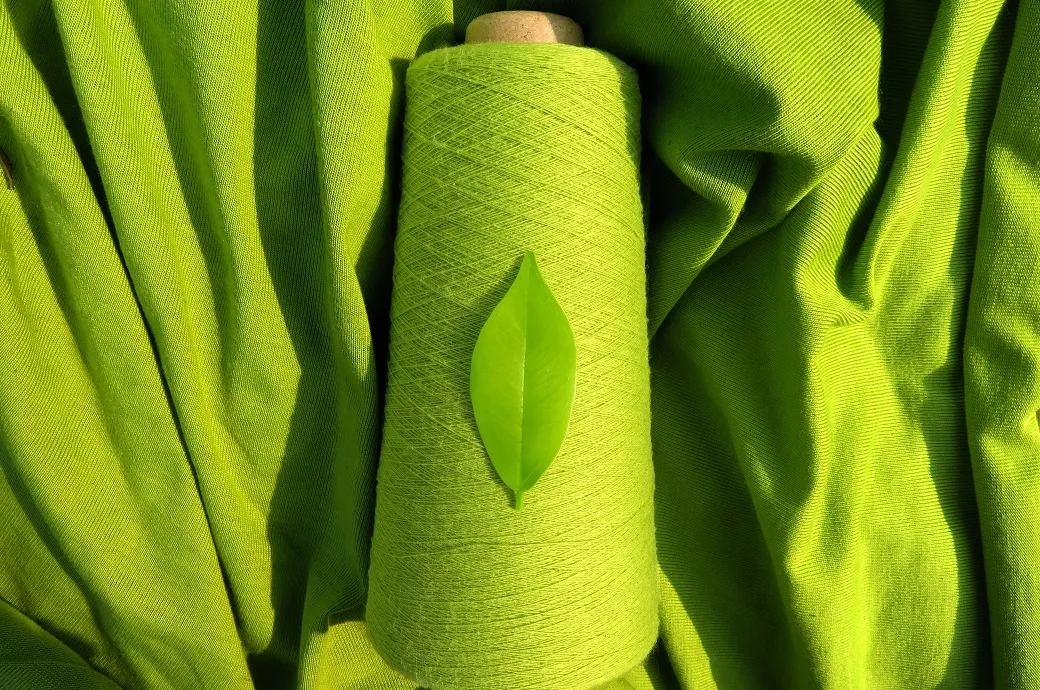
As Sage, Senior Sustainability Analyst for tap.eco, I’m thrilled to present our findings on one of humanity's oldest textiles: Linen, derived from the versatile flax plant. After a rigorous evaluation spanning its entire lifecycle—from seed to garment and beyond—Linen (Flax) achieves an outstanding Eco-Score of 91/100. This near-exemplary rating positions linen as a true leader in sustainable textiles, a testament to its inherently low-impact cultivation, remarkable durability, and commendable end-of-life properties.
This high score isn't a mere accident of nature; it's a reflection of flax's minimal demands on our planet's resources. Unlike many conventional fibers, flax cultivation requires significantly less water, relies minimally on pesticides and fertilizers, and actively contributes to soil health through crop rotation. Its strength translates to longevity, reducing consumption cycles, and its natural composition ensures a return to the earth without harm. While not entirely without its complexities in processing, the core attributes of linen make it a beacon of sustainability in a challenging industry.
To understand linen's modern ecological standing, we must first appreciate its profound historical roots. Flax, Linum usitatissimum, meaning 'most useful flax', has been cultivated for at least 30,000 years, making it one of the earliest domesticated plants. Evidence of woven flax fibers dates back to prehistoric caves, and its significance soared in ancient Egypt, where linen was revered for its purity, strength, and breathability, famously used for mummification shrouds and royal garments. Later, it clothed Romans, Celts, and medieval Europeans, forming the backbone of textile production before the advent of cotton and later, synthetics.
For millennia, flax cultivation and linen production were intertwined with regional economies and traditional, often manual, processes. The industrial revolution brought efficiency but also a shift towards cotton, which was easier to process mechanically. However, the last few decades have witnessed a powerful resurgence in linen's popularity, driven by a growing global consciousness about environmental impact. Consumers and brands are rediscovering linen's comfort, aesthetics, and, critically, its impressive sustainability credentials, propelling it back into the mainstream as a 'fiber of the future' that is, ironically, rooted in the distant past.
Our 91/100 Eco-Score for linen is built upon a detailed analysis of several key sustainability metrics:
Water Usage (Exceptional): One of linen's most celebrated attributes is its incredibly low water footprint. Unlike thirsty cotton, flax plants are predominantly rain-fed in their primary growing regions, such as Western Europe (France, Belgium, Netherlands). This drastically reduces the need for irrigation, conserving precious freshwater resources. Studies consistently show that flax cultivation requires significantly less water than cotton, making it a champion in water efficiency.
Chemical Usage (Minimal to None): Flax is naturally resilient. It requires very few, if any, pesticides or herbicides. It's not a heavy feeder, meaning it often thrives without chemical fertilizers, especially when integrated into sustainable crop rotation systems that replenish soil nutrients naturally. This not only protects biodiversity and local ecosystems but also safeguards the health of farm workers and prevents chemical runoff into waterways.
Land Use Efficiency & Carbon Output (High Impact): Flax is a rotational crop that actually improves soil quality. Its deep root system helps break up compacted soil, making it more permeable, and it leaves the soil rich in nutrients, benefiting subsequent crops. Furthermore, flax plants are efficient carbon sinks, absorbing CO2 from the atmosphere as they grow. When grown organically and processed mechanically, linen production can be remarkably carbon-neutral or even carbon-negative, far surpassing synthetic alternatives and even outperforming conventional cotton.
The journey from flax plant to linen fabric involves several stages, each with varying environmental implications:
Retting: This process separates the fiber from the woody stalk. Traditional methods like 'dew retting' (leaving flax in fields to be broken down by dew and microbes) or 'water retting' (submerging stalks in water) are natural and low-impact, albeit time-consuming. However, accelerated 'chemical retting' uses enzymes or chemicals, which can have higher environmental costs if not managed responsibly. Our score assumes a prevalence of natural retting, which is common in European flax production.
Scutching and Heckling: These are mechanical processes that extract and comb the fibers. They consume energy but are generally considered clean, producing minimal waste. The 'shives' (woody by-products) are often repurposed for particle boards, animal bedding, or biofuel, contributing to a near-zero waste system for the plant itself.
Spinning and Weaving: These stages, converting raw fibers into yarn and then into fabric, are energy-intensive, similar to other textile productions. However, innovation in renewable energy sources and more efficient machinery is continuously reducing this impact. The overall energy score for linen benefits from its low-input cultivation.
Durability & Longevity (Exceptional): Linen is renowned for its strength and resilience. It is significantly stronger than cotton and becomes softer with each wash, lasting for decades if cared for properly. This inherent durability is a cornerstone of its sustainability, as it reduces the frequency of replacement purchases, thereby lessening overall resource consumption and waste generation.
Waste Management & Biodegradability (Exceptional): At the end of its long life, 100% pure linen is fully biodegradable and compostable. Unlike synthetic fibers which can persist in landfills for hundreds of years, releasing microplastics, linen naturally returns to the earth without leaving harmful residues. This circularity is a major advantage, contributing heavily to its high 'waste management' score.
“Linen represents a profound connection to nature, an ancient wisdom for modern times. Its ability to provide comfort, strength, and beauty with minimal ecological compromise should inspire us all to rethink our relationship with the clothes we wear and the planet we share.”
While linen largely earns its reputation as a sustainable fiber, it’s crucial to apply a 'greenwashing check.' The 'sustainable' label is not universally applied without nuance. Here's what to consider:
The market for 'eco-friendly' products is rife with misleading claims. While linen is fundamentally a good choice, conscious consumers should always seek transparency and look for specific certifications that verify its sustainable journey from farm to finished product.
Your choices have power. Here’s how you can leverage linen's sustainable properties for a positive impact:
The scorecard value is an approximation. It fluctuates daily based on environmental and variable factors.
We provide a long-term estimated value calculated over several years.