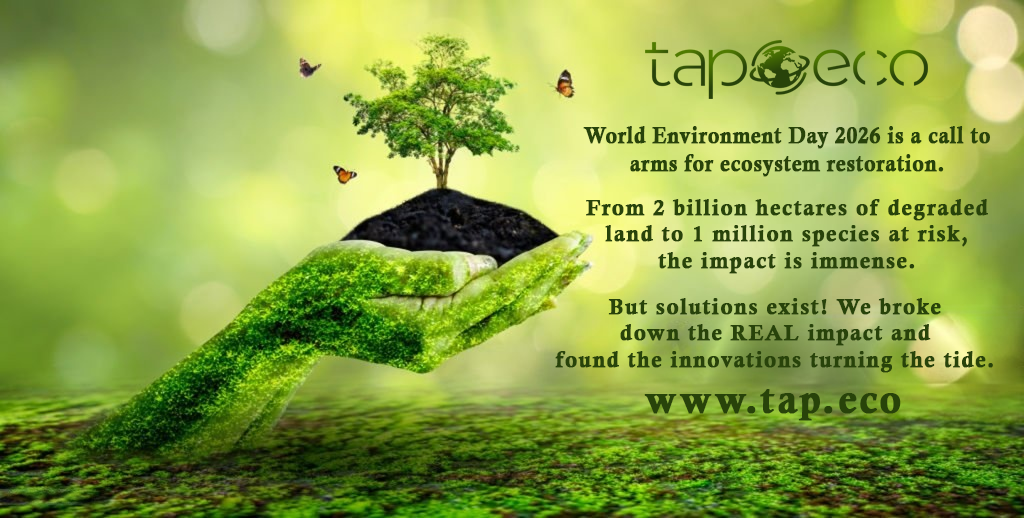
World Environment Day 2026: The Urgent Call for Ecosystem Restoration
Jun 05, 2026
This DeepDive exposes the deceptive tactics of greenwashing, quantifying its prevalence and impact on consumer trust and environmental progress. It details how greenwashing works and outlines robust solutions, from regulatory frameworks to informed consumer action, empowering readers to identify and combat misleading eco-claims.
In a world increasingly aware of climate change and environmental degradation, consumers are actively seeking sustainable choices. This rising demand has unfortunately created fertile ground for 'greenwashing' – the deceptive marketing practice where companies make unsubstantiated or misleading claims about the environmental benefits of their products, services, or practices. Far from harmless, greenwashing erodes consumer trust, undermines genuine sustainability efforts, and diverts attention and resources from real solutions. As conscious consumption becomes more mainstream, understanding how to spot fake eco-marketing is not just a personal skill, but a crucial step in driving authentic environmental change.
The Problem by the Numbers:
At its core, greenwashing is about creating an illusion of environmental responsibility without genuine commitment or action. It leverages the positive connotations of 'green' terms and imagery to influence purchasing decisions, often at the expense of true transparency and sustainability. Understanding the common tactics employed by greenwashers is the first step to becoming a more discerning consumer. These tactics are often categorized as the 'Sins of Greenwashing,' originally identified by TerraChoice Environmental Marketing (now part of UL Environment):
1. The Sin of the Hidden Trade-off: This occurs when a company highlights a single eco-attribute of a product while ignoring more significant environmental impacts. For example, a product might be marketed as 'made with recycled content' but produced in a factory that uses significant amounts of non-renewable energy and pollutes local waterways. The focus on one minor positive overshadows a larger negative.
2. The Sin of No Proof: Many brands make environmental claims that cannot be substantiated by easily accessible supporting information or third-party certification. Claims like 'all-natural' or 'eco-friendly packaging' without any accompanying data, certifications, or explanations of how these claims are met, fall into this category. If you can't find evidence, it's likely no proof exists.
3. The Sin of Vagueness: This involves using broad, undefined terms that sound appealing but lack specific meaning. Phrases such as 'green,' 'sustainable,' 'environmentally friendly,' or 'chemical-free' are common culprits. Without a clear definition or context, these terms are meaningless. What does 'green' really mean for this specific product or company?
4. The Sin of Irrelevance: A brand commits this sin when it makes an environmental claim that is true but unhelpful or irrelevant to the product category. For instance, marketing a product as 'CFC-free' today is irrelevant because CFCs (chlorofluorocarbons) have been banned globally for decades. While technically true, it's not a distinguishing eco-feature.
5. The Sin of Lesser of Two Evils: This tactic highlights a product's 'green' attributes compared to other even more environmentally damaging products within the same category, without addressing the overall impact of the category itself. For example, 'eco-friendly pesticides' might be less harmful than conventional ones, but the fundamental problem of pesticide use remains unaddressed.
6. The Sin of Fibbing: This is the most egregious form of greenwashing, involving outright false environmental claims or misrepresentation. This could include faking certifications, making up environmental benefits, or claiming a product is certified by a non-existent standard. This is less common but highly damaging when discovered.
7. The Sin of Worshipping False Labels: Brands might create or use fake certification labels, or even legitimate-looking but irrelevant labels, to give the impression of third-party endorsement. These labels often feature green imagery (leaves, globes) but lack any real authority or verification. Always check if a certification body is legitimate and recognized.
By recognizing these common strategies, consumers can develop a critical eye and avoid falling prey to misleading marketing. Greenwashing exploits our desire to do good, making it essential to look beyond the surface and demand true transparency.
The fight against greenwashing is multi-faceted, involving stricter regulations, technological advancements, and the collective power of informed consumers. Globally, regulatory bodies are stepping up their game to ensure greater accountability and transparency.
In the United States, the Federal Trade Commission (FTC) Green Guides provide a framework for environmental marketing claims, advising marketers on how to avoid deceiving consumers. While not legally binding regulations, they outline principles the FTC uses to evaluate claims and prosecute unfair or deceptive practices. The FTC is currently undergoing a review of these guides to update them for modern challenges, including carbon neutrality claims and the use of 'sustainable' terminology.
Across the Atlantic, the European Union is taking a pioneering stance with its proposed Green Claims Directive. This directive aims to tackle greenwashing head-on by mandating that companies prove their environmental claims with scientific evidence, often requiring third-party verification. It will also ban vague terms like 'environmentally friendly' if not substantiated and prohibit claims based on future environmental performance unless supported by clear, verifiable commitments. This legislation promises to set a new global standard for environmental transparency.
Beyond legislation, credible third-party certifications are a powerful antidote to greenwashing. Organizations like B Lab (for B Corp certification), Cradle to Cradle Products Innovation Institute, Global Organic Textile Standard (GOTS), Fair Trade USA, and Rainforest Alliance provide rigorous standards and independent verification. These certifications ensure that products and companies meet comprehensive environmental and social benchmarks, offering consumers a trustworthy signal of genuine sustainability.
Technology also plays a crucial role. Blockchain technology, for example, is being explored to create immutable, transparent records of supply chains, allowing consumers to trace a product's journey from raw material to shelf and verify its environmental claims. Artificial intelligence and data analytics are also emerging tools, capable of sifting through vast amounts of company data to identify inconsistencies and flag potential greenwashing tactics.
Ultimately, the most potent force against greenwashing is an empowered and educated consumer base. As more people learn to question claims, research brands, and demand verifiable proof, companies will be increasingly incentivized to adopt genuinely sustainable practices rather than merely appearing to do so. This collective demand for authenticity drives a race to the top, where true eco-innovators are rewarded, and greenwashers are held accountable.
“Greenwashing is a systemic challenge that requires systemic solutions. Stronger regulations and transparent verification are non-negotiable for building consumer trust and fostering a truly sustainable economy.”
Don't just read. Contribute to a more transparent and sustainable marketplace.